A discovery platform for characterizing and manipulating bacterial cell mechanics to solve complex challenges in Biomedicine, Animal Nutrition, and Biometallurgy.
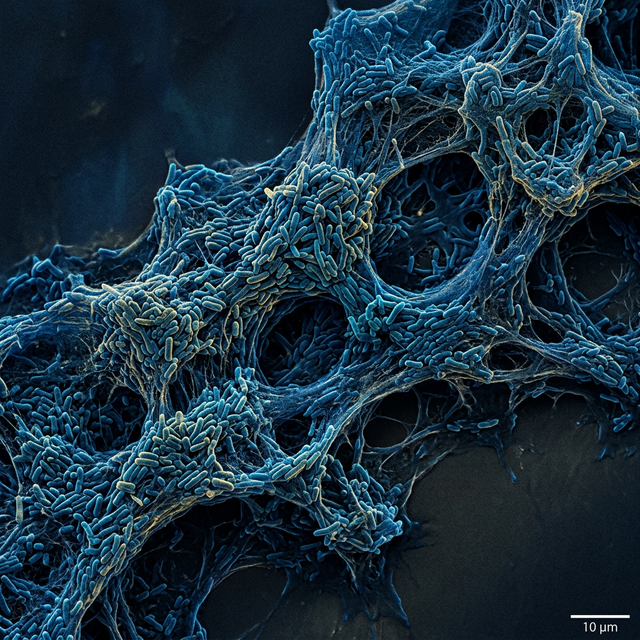
Current antibiotics often fail not because bacteria are genetically resistant, but because they tolerate stresses. In chronic conditions like Cystic Fibrosis and COPD, pathogens like M. abscessus and P. aeruginosa modify cell physiological properties to optimize tolerance to host immunity and conventional antibiotics.
The approach taken to develop new antibiotics has focused almost exclusively on targeting discrete molecular mechanisms that are believed to be essential systems for life and virulence. However, evolution and adaptation readily permit bacteria to circumvent such chemotherapeutic strategies. We therefore propose a new paradigm for drug discovery, one that bacteria cannot overcome to cheat death.
We have discovered that bacterial pathogens actively switch into differentiated mechanical morphotypes affecting survival during host cell infection. The trajectory of switching into discrete mechanical morphotypes dictates whether bacterial pathogens will exhibit enhanced tolerance to antibiotics and host innate immunity.
Characterizing chemical compounds that drive mechanical change to treat infections and improve physiological outcomes in both human and animal health industries.
Directing the mechanics of chemilithoautotrophs for efficient bioleaching, mineral purification, and industrial-scale microorganism adaptation.
Specific bacterial genes regulate the mechanical cell state. Identifying these genes has provided us the ability to uncover new therapeutic targets.
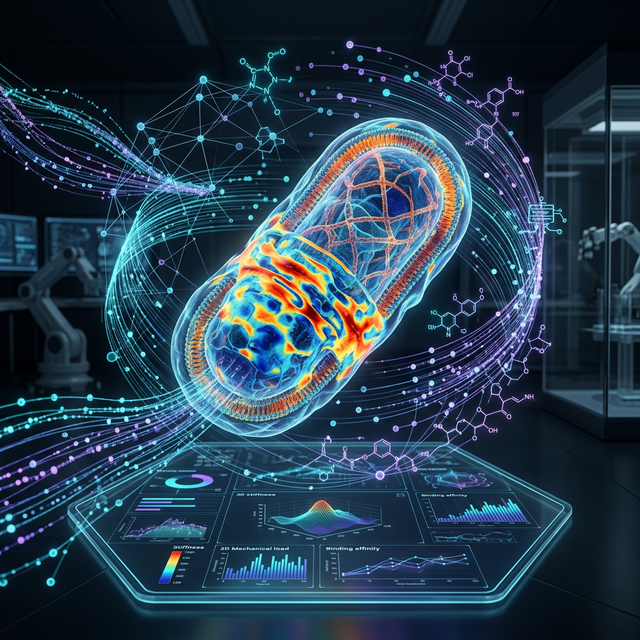
We integrate high-throughput biophysical profiling with generative AI to identify compounds that modulate the mechanical states enabling bacterial tolerance.
Utilizing Chemical Transformers to predict small molecules that target the genes regulating mechanical morphotypes.
Validating lead candidates in host-relevant infection models to confirm attenuation of persistence and tolerance.
Rapidly characterizing changes in cell stiffness and density within large compound libraries to identify mechanical hits.
While antibiotics are expected to reduce bacterial loads directly by killing or blocking bacterial cell replication, the selective pressures added drive for the emergence of evolved mutants that are resistant and consequently to replace the original population. Our approach focuses on modulating bacterial cell mechanical properties, for which the mechanical cell state represents a fundamental cell property enabling survival. Virulence is inherently dependent on the mechanical nature of the cell and if modified the bacterium is rendered susceptible to killing.
Combining expertise in microbiology, computational neuroscience, and business operations.
Co-Founder of multiple tech startups. Extensive experience leading finance & operations for VC-backed companies.
Microbiologist & Host-Pathogen specialist. Institut Pasteur, EPFL, UCSF, Harvard University.
Computational Neuroscientist. Expert in AI models for biomarker discovery and computational modeling